
NEWS
CBN Data Shows Nigerian Banks Pay Just 2.7% on Savings While Loan Interest Rates Hit 60%
CBN Data Shows Nigerian Banks Pay Just 2.7% on Savings While Loan Interest Rates Hit 60%

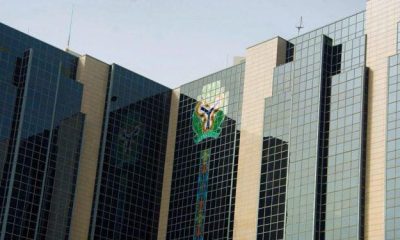
Bank customers in Nigeria are currently earning as little as 2.7 percent interest on savings deposits while paying lending rates of up to 60 percent on loans, according to the latest data released by the Central Bank of Nigeria. The figures highlight the widening gap between deposit and lending rates across Deposit Money Banks and have renewed concerns about the high cost of credit in the economy.
The data, published following the most recent Monetary Policy Committee meeting, shows that the apex bank has directed all commercial banks to publicly disclose their lending rates. This move is aimed at improving transparency, enabling better business decisions, and allowing borrowers to compare loan costs across banks.
According to the report, manufacturing, mining and quarrying, public utilities, finance and insurance, as well as construction sectors face maximum lending rates of up to 60 percent in some banks. Oil and gas loans are priced as high as 46 percent per annum, while power and energy financing attracts rates of up to 48 percent.
Loans to the capital market are priced around 19.5 percent, education loans average about 23 percent, and lending to government entities stands close to 19 percent. Real estate loans attract rates of up to 46.5 percent, while general commerce borrowers pay as much as 45 percent annually. Water supply, sewage, waste management, and remediation activities borrow at roughly 36 percent, while information and communication sector loans are priced around 30 percent.
Despite the benchmark Monetary Policy Rate standing at 27 percent, banks continue to pay relatively low returns to depositors. Average interest rates on demand deposits range between 0.48 percent and 7.33 percent, while savings deposit rates range from 2.70 percent to 8.15 percent. Analysts note that this growing spread means customers are paying significantly more to access credit than they earn on their deposits.
Financial analysts say the elevated lending rates have increased production costs for businesses, particularly in the manufacturing sector, and have placed upward pressure on market prices. They explain that loan pricing is largely influenced by the perceived risk profile of borrowers, with prime customers often receiving credit at lower rates compared to higher-risk borrowers.
The Monetary Policy Rate, which represents the rate at which the Central Bank lends to commercial banks, remains at 27 percent. At the end of its 303rd meeting, the Monetary Policy Committee announced the retention of the MPR at 27.0 percent, while adjusting the standing facility corridor to plus 50 and minus 450 basis points. The committee also retained the Cash Reserve Requirement at 45 percent for Deposit Money Banks, 16 percent for Merchant Banks, and 75 percent for non-Treasury Single Account public sector deposits. The Liquidity Ratio was also maintained at 30 percent.
The MPC stated that its decisions were driven by the need to sustain progress toward lower and more stable inflation while preserving financial system stability. The committee reaffirmed its commitment to data-driven policy decisions and continuous monitoring of domestic and global economic conditions.
Despite the high cost of borrowing, Nigeria’s private sector remained in expansionary territory at the end of 2025. Data from the Purchasing Managers’ Index indicates improvements in customer demand, new orders, output, and purchasing activity. Employment levels also rose, although job creation remained modest. Business confidence strengthened, even as inflationary pressures edged slightly higher in December.
The PMI reading stood at 53.5 in December, marginally lower than November’s 53.6, signaling sustained improvement in business conditions for the thirteenth consecutive month. Analysts say this trend reflects resilience in economic activity as the country moves into 2026.
Economic analysts project that Nigeria’s economy could grow by about 3.8 percent year-on-year in 2025 and accelerate to approximately 4.1 percent in 2026. Manufacturing and services are expected to record stronger growth, supported by infrastructure investment, improved trade conditions, increased oil and gas activity, and the operational impact of large industrial projects.
Looking ahead, experts believe that easing inflation, exchange rate stabilisation, and a potential moderation in interest rates could support private consumption and business investment. If sustained, these factors may allow more sectors to contribute meaningfully to economic growth in 2026, with positive implications for employment and household incomes.



 Admission23 hours ago
APPLY NOW: Ogun State Polytechnic of Health and Allied Sciences Begins 2026/2027 Post-UTME, ND and HND Admission Sales
- Admission23 hours ago
APPLY NOW: Delta State Polytechnic, Otefe-Oghara Opens Admission for 2026/2027 POST UTME, ND and HND Programmes
 POLYTECHNIC NEWS1 hour ago
Federal Polytechnic Ukana Introduces Online Application Portal for 2026 Recruitment Exercise
- POLYTECHNIC NEWS23 hours ago
Federal Polytechnic Idah Bans Unauthorized Social Activities on Campus
- POLYTECHNIC NEWS1 hour ago
Osun State Polytechnic Matriculates 2025/2026 Part-Time Students
- POLYTECHNIC NEWS58 minutes ago
Dr Ashinya Felicitates With Akperan Orshi Polytechnic Over 27th Matriculation Ceremony