
EDUCATION
UNESCO Launches UK-Backed Education Loan Scheme for Nigerians Seeking International University Admission
UNESCO Launches UK-Backed Education Loan Scheme for Nigerians Seeking International University Admission

The United Nations Educational, Scientific and Cultural Organisation has introduced a new education loan scheme designed to support Nigerians pursuing undergraduate and postgraduate studies abroad, in a move set to expand access to global universities through structured financing and application support.
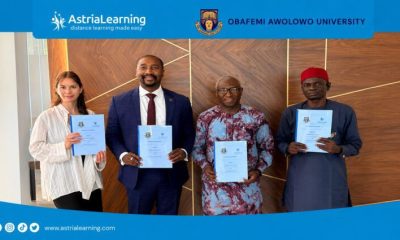
The initiative is being implemented through UNESCO Read and Earn Federation (UNESCO-REF) in collaboration with the Police Officers’ Wives Association and the United Kingdom Global Universities Application Portal. The partnership was formalised in Abuja with the signing of a Memorandum of Understanding, signaling the commencement of the international student funding programme.
International Student Loan Scheme for Nigerians
According to officials at the launch, the education financing facility is designed to complement existing domestic student loan structures by targeting Nigerians who intend to study in foreign institutions.
While the Nigeria Education Loan Fund focuses primarily on supporting students within Nigeria, the new UNESCO-backed scheme provides an alternative funding channel for those seeking admission into universities in the United Kingdom, Europe, North America, Asia, and other global study destinations.
The programme is expected to begin with a pilot phase in selected police secondary schools before expanding nationwide by September. Organisers say the phased rollout will ensure proper coordination, financial oversight, and institutional alignment before full-scale implementation.
Access to Over 250 International Universities
Programme coordinators disclosed that the initiative has partnerships with more than 250 universities worldwide. The education loan facility is open to qualified candidates at undergraduate, master’s, and doctoral levels from both public and private secondary or tertiary institutions.
Notably, the scheme is structured to accommodate applicants without restrictions based on language background or geographical location, widening opportunities for Nigerian students across diverse academic disciplines.
Officials emphasised that the collaboration goes beyond university placement by integrating financial backing, application processing support, and advisory services. This approach is intended to reduce common barriers such as tuition deposits, visa documentation expenses, and administrative application costs.
Admission Sponsorship and Fee Waivers
As part of its initial rollout strategy, UNESCO-REF announced it would sponsor the admission processing costs for the first 40 students selected from police secondary schools under the pilot phase. Implementation is set to begin immediately, with designated financial partners managing disbursement structures and repayment frameworks.
In addition, UAPP confirmed that the first 1,000 participating students will benefit from application fee waivers, mentorship support, secure documentation handling, and priority admission processing across partner institutions.
This component of the programme is expected to increase approval rates for Nigerian applicants while reducing the financial pressure typically associated with international admissions.
Support for Children of Police Officers and Nigerian Youth
The National President of the Police Officers’ Wives Association described the initiative as a major boost for Nigerian youth, particularly children of police officers who often face financial constraints when seeking overseas education.
By combining institutional partnerships, structured loan financing, and global university networks, the scheme aims to create sustainable pathways for students seeking degrees in high-demand fields such as medicine, engineering, artificial intelligence, finance, law, cybersecurity, and international business.
Economic and Educational Impact
Education financing remains a high-growth sector globally, with rising tuition costs and increased demand for cross-border academic mobility. For Nigerian families, access to international student loans can help bridge funding gaps and unlock opportunities in competitive global institutions.
Industry analysts note that structured international education loans also strengthen Nigeria’s long-term human capital development by enabling graduates to gain global exposure, professional certifications, and advanced research training.
With over 250 partner universities and an expanding operational framework, the UNESCO-backed loan scheme positions itself as a strategic education financing platform tailored to Nigerian students seeking reputable foreign degrees.
What This Means for Prospective Applicants
Students interested in studying abroad can expect the following benefits under the programme:
Access to structured international student loans
Partnership coverage across multiple global universities
Application fee waivers for early participants
Admission processing support and mentorship
Managed payment and repayment systems through approved financial institutions
As implementation progresses, stakeholders anticipate increased awareness and participation, particularly among families exploring safe, transparent, and institution-backed funding options for overseas education.
The launch of the UNESCO-REF education loan facility marks a new phase in international student financing for Nigerians. By aligning global university partnerships with structured loan support, the initiative offers an alternative funding route for students aiming to secure admission abroad.
With the pilot phase already underway and nationwide expansion planned, the programme is set to play an active role in shaping access to global higher education opportunities for Nigerian students in 2026 and beyond.



















 EDUCATION9 hours ago
NYSC Advises Parents to Provide Extra Travel Funds for Corps Members
- POLYTECHNIC NEWS9 hours ago
SSANIP Urges Federal Government to Enforce NBTE Guidelines on Polytechnic Staff Roles
- EDUCATION9 hours ago
NYSC to Make Anniversary Celebration an Annual Nationwide Event – DG
- POLYTECHNIC NEWS9 hours ago
Kogi Poly Rector Hosts Governor’s Aide, Reaffirms Commitment to Student Welfare and Institutional Reforms
- POST UTME9 hours ago
Kogi State Polytechnic Announces 2026/2027 Post-UTME Screening Exercise
- POLYTECHNIC NEWS9 hours ago
Federal Polytechnic Ohodo Matriculates New Students at 3rd Ceremony, Reaffirms Commitment to Academic Excellence
- EDUCATION9 hours ago
NYSC Warns Prospective Corps Members Against Applying Henna Before Camp Registration
- POLYTECHNIC NEWS9 hours ago
Federal Polytechnic Bali Celebrates Deputy Rector on Successful PhD Defence